

As parents, we often think learning begins when a child starts school.
But in reality — learning begins much earlier.
In fact, the early years (0–5 years) are the most critical phase of a child’s life.
This is when the brain develops at an incredible pace — faster than at any other time.
And this is exactly where early childhood education plays a powerful role.
Understanding Early Brain Development
A child’s brain forms millions of connections every second in the early years.
These connections are shaped by:
- Experiences
- Environment
- Interactions
This means:
👉 What a child sees, hears, and experiences — directly impacts development.
Why Preschool Plays a Crucial Role
A well-designed preschool provides:
- Structured experiences
- Social exposure
- Guided learning
Which together support:
✔ Cognitive growth
✔ Emotional stability
✔ Social skills
Key Areas of Development in Early Childhood
1. Cognitive Development (Thinking Skills)
Children learn:
- Problem-solving
- Memory
- Logical thinking
Through:
- Activities
- Games
- Exploration
2. Language Development
In preschool, children:
- Learn new words
- Improve communication
- Express thoughts clearly
This builds:
✔ Confidence
✔ Understanding
3. Social & Emotional Development
Children learn:
- Sharing
- Cooperation
- Managing emotions
They begin to:
- Build friendships
- Understand feelings
4. Motor Skills Development
Fine Motor:
- Drawing
- Writing
- Holding objects
Gross Motor:
- Running
- Jumping
- Balancing
These are essential for overall growth.
5. Confidence & Independence
Preschool helps children:
- Take small responsibilities
- Make decisions
- Feel confident
This independence stays with them for life.
The Science Behind Early Learning
Research shows:
👉 90% of brain development happens before age 5
This is why:
- Early exposure matters
- Quality environment matters
- Right guidance matters
What Happens Without Early Learning Exposure?
Without proper stimulation:
- Development may slow down
- Social skills may be limited
- Confidence may be affected
That’s why early education is not optional —
it’s essential.
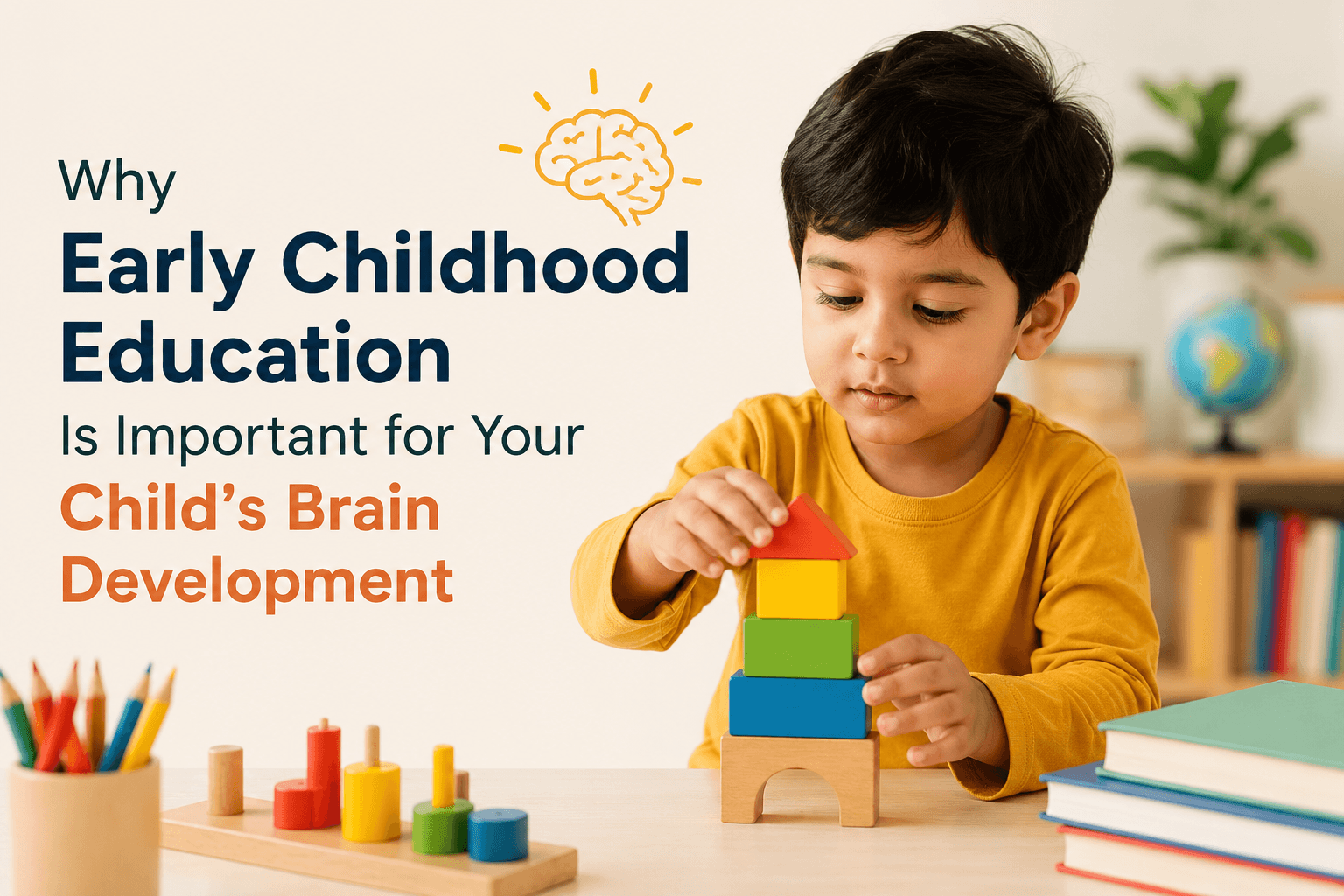
Role of Play in Brain Development
Play is not just fun — it’s learning.
Through play, children:
- Explore
- Experiment
- Imagine
Play-based learning:
✔ Enhances creativity
✔ Improves problem-solving
✔ Builds social skills
What Makes a Good Early Childhood Program?
A quality preschool should focus on:
- Activity-based learning
- Emotional well-being
- Individual attention
- Safe environment
Not just academics — but holistic growth.
How Parents Can Support Brain Development
Even at home, you can:
- Talk and interact regularly
- Encourage play
- Read stories
- Limit screen time
Because learning doesn’t stop outside school.
Long-Term Benefits of Early Education
Children who attend preschool:
✔ Perform better academically
✔ Develop strong social skills
✔ Show higher confidence
✔ Adapt better to school
It creates a strong foundation for future success.
At First Step Together, Lucknow
We understand the importance of early years.
Our approach focuses on:
- Activity-based learning
- Life skills development
- Emotional growth
- Overall wellness
We don’t just teach — we nurture.
🎯 Admissions Open 2026–27
Give your child the right start.
👉 Visit our preschool
👉 Experience our approach
👉 See how we support every child’s journey
Final Thought
Early childhood is not just a phase — it’s the foundation of life.
The experiences children have today shape who they become tomorrow.
And as parents, choosing the right environment is one of the most powerful decisions you can make.